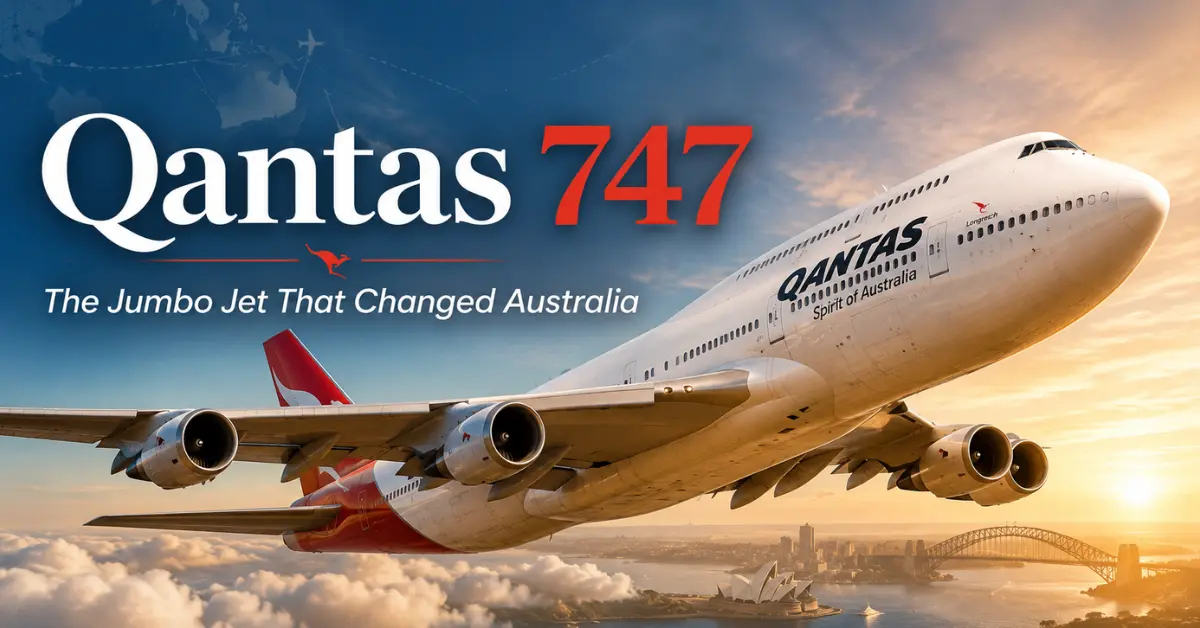
The Qantas 747 was more than just a large aircraft. For many Australians, it was the plane that made the world feel closer.
Before the Boeing 747 arrived, international air travel from Australia was expensive, slower, and less accessible for ordinary travellers. When Qantas introduced the jumbo jet in the early 1970s, it changed everything. More people could fly overseas, fares became more affordable, and Australia became better connected to Asia, Europe, and North America.
For almost 50 years, the Qantas Boeing 747 carried families, tourists, migrants, celebrities, sports teams, political leaders, and everyday Australians across the globe. It became one of the most loved aircraft in Qantas history.
For more helpful aviation stories and airline history, explore our Airlines Guides.
Quick Facts About the Qantas 747
| Fact | Details |
|---|---|
| Aircraft type | Boeing 747 |
| Nickname | Queen of the Skies |
| First Qantas 747 service | 17 September 1971 |
| First route | Sydney to Singapore via Melbourne |
| Final Qantas 747 flight | July 2020 |
| Final aircraft | VH-OEJ “Wunala” |
| Time in Qantas service | Nearly 50 years |
| Major role | Long-haul international travel |
Why the Qantas 747 Was So Important
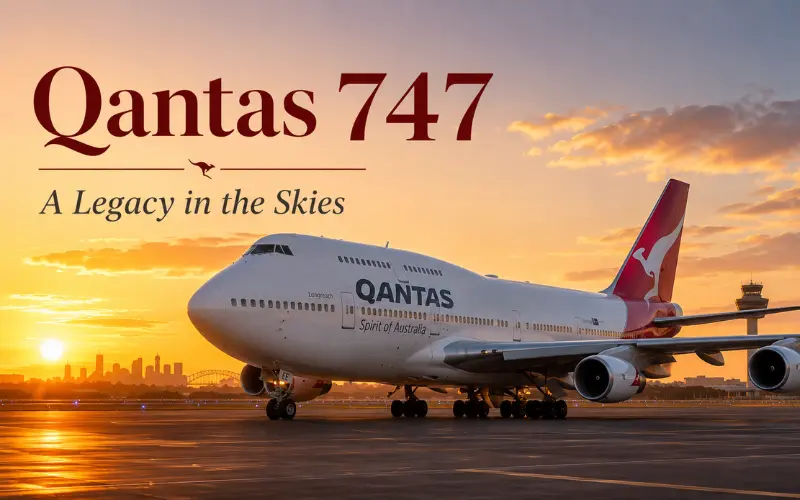
Australia sits far from many major global cities. That distance has always made aviation especially important for the country.
Before the 747, flying overseas was often seen as a luxury. Seats were limited, fares were high, and long-haul journeys involved several stops. The Boeing 747 helped change that by offering:
- More seats per flight
- Better long-haul range
- Lower operating cost per passenger
- More comfortable international travel
- Greater access to Europe, Asia, and North America
Today, many passengers also use reward programs to make travel more affordable, so it helps to know how much 100 Qantas points are worth before redeeming points.
The Qantas 747 did not simply carry passengers. It helped open Australia to the world.
The Beginning: Qantas Orders the Boeing 747
Qantas placed its order for the Boeing 747 in the late 1960s, at a time when the aircraft was one of the most advanced passenger jets ever built.
The airline needed an aircraft that could handle long-distance international routes from Australia. The Boeing 747 was ideal because it had the size, range, and power to serve major overseas destinations more efficiently than earlier jets.
When the first Qantas 747 arrived, it marked the start of a new era. The aircraft helped make international travel possible for millions of Australians who may never have flown overseas before.
The First Qantas 747 Passenger Flight
The first Qantas 747 passenger service operated on 17 September 1971 from Sydney to Singapore via Melbourne.
This route was important because Singapore was a major stop on the famous Kangaroo Route between Australia and the United Kingdom.
For Australians travelling to Europe, the 747 made the journey feel more modern, more comfortable, and more achievable.
How the Qantas 747 Changed Travel for Australians
The 747 helped bring more international visitors to Australia. It also gave Australians easier access to destinations such as Singapore, London, Los Angeles, Hong Kong, and Tokyo.
Today, passengers can easily manage their flights, select seats, and update travel details through Qantas Manage Booking.
The Qantas 747 changed Australian travel in several major ways.
1. It made overseas trips more affordable
Because the 747 could carry many more passengers than earlier aircraft, airlines could spread operating costs across more seats. This helped reduce fares and made overseas travel more realistic for middle-class Australians.
2. It connected families across continents
Many Australians have family roots in Europe, Asia, and other parts of the world. The 747 helped connect migrant families with loved ones overseas.
For some passengers, stepping onto a Qantas 747 was the beginning of a new life in Australia. For others, it was the first chance to visit family members they had not seen in years.
3. It boosted tourism
The 747 helped bring more international visitors to Australia. It also gave Australians easier access to destinations such as Singapore, London, Los Angeles, Hong Kong, and Tokyo.
4. It made Qantas a stronger global airline
The Boeing 747 gave Qantas the scale and range needed to compete on major international routes. It became a symbol of the airline’s long-haul strength.
Qantas 747 Timeline
| Year | Event |
|---|---|
| 1967 | Qantas orders its first Boeing 747 aircraft |
| 1971 | First Qantas 747 passenger service begins |
| 1974 | A Qantas 747 helps evacuate people after Cyclone Tracy in Darwin |
| 1979 | Qantas introduces Business Class travel |
| Late 1970s | Qantas operates an all-747 fleet |
| 1989 | A Qantas Boeing 747-400 flies nonstop from London to Sydney |
| 2020 | Final Qantas 747 leaves the fleet |
The Qantas 747 and the Birth of Business Class
One of the most interesting parts of the Qantas 747 story is its connection to Business Class.
In 1979, Qantas introduced Business Class travel. This changed the airline industry because, before Business Class, most passengers mainly chose between First Class and Economy Class.
Business Class created a new middle option for travellers who wanted more comfort, better service, and extra space without paying for First Class.
On long international flights, this made a huge difference.
Business Class gave passengers:
- More legroom
- Better meals
- Improved service
- Priority check-in
- A quieter and more comfortable cabin experience
Today, Business Class is a normal part of international aviation. The Qantas 747 helped make it happen.
The Qantas 747 in Emergencies and Rescue Missions
The Qantas 747 was not only used for regular passenger flights. It also played a role in emergency operations.
One of its most famous missions came after Cyclone Tracy hit Darwin in 1974. A Qantas 747 helped evacuate hundreds of people from the devastated city.
Over the decades, Qantas 747 aircraft also supported relief and repatriation flights during global crises. These missions showed why the aircraft was so valuable: it could carry large numbers of people and supplies over very long distances.
The 747 was not just powerful. It was dependable.
What Made the Boeing 747 Special?
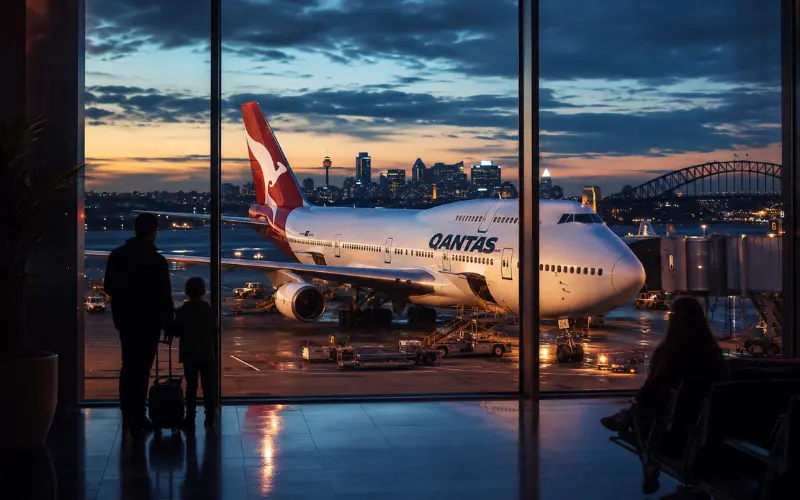
The Boeing 747 had a unique design that made it instantly recognisable.
Its most famous feature was the upper deck hump near the front of the aircraft. This gave the 747 its iconic shape and made it one of the easiest aircraft to identify in the sky.
But the 747 was not famous only because of how it looked. It was special because of what it could do.
Key features of the Boeing 747
- Four powerful engines
- Long-haul flying ability
- Large passenger capacity
- Wide-body cabin
- Upper deck seating
- Strong cargo capability
- Excellent range for its era
For Qantas, these features were perfect for long-distance routes from Australia.
Qantas 747 Variants
Qantas operated several versions of the Boeing 747 over the years.
| Variant | Why It Mattered |
|---|---|
| Boeing 747-200 | Helped launch Qantas’ jumbo jet era |
| Boeing 747SP | Designed for very long-range routes |
| Boeing 747-300 | Offered more capacity and improved performance |
| Boeing 747-400 | Became a major long-haul workhorse |
| Boeing 747-400ER | Extended-range version used in the final years |
This variety shows how important the 747 was to Qantas. The airline kept updating its jumbo fleet as technology improved.
The Record-Breaking London to Sydney Flight
In 1989, a Qantas Boeing 747-400 made aviation history when it flew nonstop from London to Sydney.
This was not a normal passenger service. It was a record-setting delivery flight, but it showed the potential of ultra-long-haul aviation.
That flight helped build the dream of nonstop travel between Australia and Europe. Decades later, Qantas continued working toward that idea through modern long-range aircraft.
The Final Qantas 747 Flight
The final Qantas 747 left the fleet in July 2020. The aircraft was VH-OEJ, known as “Wunala.”
Its last departure became an emotional moment for aviation fans, Qantas staff, and passengers around the world. During its farewell, the aircraft famously drew a kangaroo-shaped flight path off Australia’s east coast before heading across the Pacific.
The final flight marked the end of nearly 50 years of Qantas Boeing 747 operations.
Why Did Qantas Retire the Boeing 747?
The Qantas 747 retired because aviation had changed.
By 2020, airlines were moving away from older four-engine aircraft. Newer twin-engine jets could fly long distances while using less fuel. They were cheaper to operate, easier to fill, and better suited to modern airline networks.
The COVID-19 pandemic also accelerated the retirement of many older aircraft around the world, including the Qantas 747.
Main reasons Qantas retired the 747
- High fuel consumption
- Expensive maintenance
- Newer aircraft were more efficient
- Falling demand during the pandemic
- Shift toward Boeing 787 and Airbus A350 aircraft
- Changing long-haul travel patterns
The retirement made business sense, but emotionally, it was difficult for many people. The 747 had been part of Qantas’ identity for generations.
Qantas 747 vs Modern Long-Haul Aircraft
The 747 was perfect for its time. Modern aircraft are better suited to today’s airline economics.
For readers interested in Qantas’ newer premium cabins, the Qantas A380 Business Class experience shows how long-haul comfort has evolved after the 747 era.
| Feature | Qantas 747 | Modern Aircraft Like 787/A350 |
|---|---|---|
| Engines | Four | Two |
| Fuel efficiency | Lower | Higher |
| Capacity | Very high | Medium to high |
| Operating cost | Higher | Lower |
| Passenger comfort | Iconic and spacious | Quieter, newer cabins |
| Best use | High-demand long-haul routes | Flexible long-haul routes |
The 747 was perfect for its time. Modern aircraft are better suited to today’s airline economics.
The Legacy of the Qantas 747
The Qantas 747 left behind a powerful legacy.
It helped Australians travel overseas in greater numbers. It supported migration, tourism, business, diplomacy, and emergency rescue missions. It helped Qantas become one of the world’s best-known long-haul airlines.
Most importantly, it became personal.
Many Australians remember their first international flight on a Qantas 747. Some remember looking up at the huge aircraft as children. Others remember walking up the jet bridge, seeing the red kangaroo on the tail, and feeling that they were about to begin something special.
That is why the Qantas 747 still matters.
It was not only an aircraft. It was a bridge between Australia and the world.
FAQs About the Qantas 747
When did Qantas first fly the Boeing 747?
Qantas began Boeing 747 services in 1971. Its first passenger service operated from Sydney to Singapore via Melbourne.
When did Qantas retire the Boeing 747?
Qantas retired its final Boeing 747 in July 2020.
What was the last Qantas 747?
The final Qantas 747 was VH-OEJ, named “Wunala.”
Why was the Qantas 747 important?
The Qantas 747 made international travel more affordable and accessible for Australians. It also helped Qantas expand its long-haul network.
Did Qantas use the 747 on the Kangaroo Route?
Yes. Qantas used the Boeing 747 on major international routes, including the Kangaroo Route to London via Singapore.
Did Qantas introduce Business Class on the 747?
Qantas introduced Business Class travel in 1979, helping shape the modern premium travel experience.
Why did Qantas stop flying the 747?
Qantas retired the 747 because newer aircraft such as the Boeing 787 and Airbus A350 are more fuel-efficient and cheaper to operate.
What made the Boeing 747 famous?
The Boeing 747 became famous for its huge size, long range, four engines, wide-body cabin, and iconic upper deck hump.
Final Thoughts
The Qantas 747 changed Australian aviation forever.
It made the world more reachable, helped millions of passengers cross oceans, and gave Qantas one of the most recognisable aircraft in airline history. Even though it no longer flies for Qantas, its story remains deeply connected to Australia’s modern travel history.